Best Protein Powders 2026 (Top 10): Whey vs Plant-Based, Tested and Compared
I have been using protein powder almost daily for six years. In that time, I have gone through probably 40 different tubs across a dozen brands. Some tasted like melted ice cream, some tasted like chalk dissolved in water, and one particularly bad plant-based option had the texture of wet sand. The protein powder market is massive, confusing, and full of supplements that look identical on the shelf but differ significantly in what actually ends up in your shaker cup. Here is what I have learned about choosing the right one.
Whey vs Plant-Based Protein: The Core Difference
Whey protein is derived from milk — it is the liquid byproduct of cheese production. It contains all nine essential amino acids and has the highest leucine content of any protein source, making it the gold standard for muscle protein synthesis. Whey comes in three forms: concentrate (70-80% protein, some lactose and fat), isolate (90%+ protein, minimal lactose), and hydrolysate (pre-digested for faster absorption, most expensive).
Plant-based protein typically blends pea protein, rice protein, hemp, or other plant sources to achieve a complete amino acid profile. No single plant source matches whey's amino acid profile on its own, which is why blends are standard. Plant proteins generally have lower leucine content per serving and slightly lower digestibility scores (measured by DIAAS — Digestible Indispensable Amino Acid Score).
| Factor | Whey Protein | Plant-Based Protein |
|---|---|---|
| Protein per scoop (typical) | 24-30g | 20-25g |
| Leucine per serving | 2.5-3.0g | 1.5-2.2g |
| DIAAS Score | 1.09 (excellent) | 0.82-0.93 (good, varies by blend) |
| Calories per scoop | 110-140 | 100-150 |
| Digestion speed | Fast (30-60 min) | Moderate (60-90 min) |
| Lactose content | Low (isolate) to moderate (concentrate) | None |
| Common allergens | Dairy | Soy, tree nuts (in some blends) |
| Taste (general) | Better blending, creamier | Grittier, earthier without masking |
| Environmental impact | Higher (dairy farming) | Lower (plant agriculture) |
| Price per serving | $0.80 - $2.00 | $1.00 - $2.50 |
What to Look For on the Label
The supplement industry has a "protein spiking" problem. Some manufacturers add cheap amino acids like glycine or taurine to inflate the total protein number on the label without providing the complete amino acids your body needs for muscle synthesis. The nitrogen testing method used for protein quantification cannot distinguish between complete protein and free amino acids, which creates an opportunity for deception.
Red flags to watch for: individual amino acids listed in the ingredients (especially glycine, taurine, or creatine listed separately from the protein source); proprietary blends that do not disclose amounts; unusually low prices for high protein claims; and lack of third-party testing certification.
Look for: Informed Sport, NSF Certified for Sport, or Labdoor tested certification. These organizations independently verify that the product contains what the label claims and is free from banned substances. Informed Sport and NSF for Sport are particularly important if you compete in tested athletics.
Best Protein Powders Compared (2026)
| Product | Type | Protein/Scoop | Calories | Third-Party Tested | Best For | Price/Serving |
|---|---|---|---|---|---|---|
| Optimum Nutrition Gold Standard | Whey Isolate/Concentrate | 24g | 120 | Informed Sport | Best overall whey | $1.10 |
| Transparent Labs 100% Grass-Fed Whey | Whey Isolate | 28g | 120 | Informed Sport | Best clean label whey | $1.50 |
| Myprotein Impact Whey Isolate | Whey Isolate | 21g | 90 | Informed Sport | Best budget whey | $0.75 |
| Dymatize ISO100 | Hydrolyzed Whey Isolate | 25g | 110 | Informed Sport | Best tasting whey isolate | $1.30 |
| Momentous Essential Grass-Fed Whey | Whey Isolate | 20g | 100 | NSF for Sport | Best for athletes in tested sports | $2.00 |
| Garden of Life Sport Organic Plant | Pea/Sprouted blend | 30g | 160 | NSF for Sport | Best plant-based overall | $1.80 |
| Vega Sport Premium | Pea/Pumpkin/Sunflower/Alfalfa | 30g | 170 | Informed Sport | Best plant-based for performance | $1.90 |
| Orgain Organic Protein | Pea/Brown Rice | 21g | 150 | Clean label verified | Best budget plant-based | $1.10 |
| KOS Organic Plant Protein | Pea/Flax/Quinoa/Pumpkin/Chia | 20g | 170 | Third-party tested | Best tasting plant-based | $1.30 |
| Naked Whey | Whey Concentrate (1 ingredient) | 25g | 120 | Third-party tested | Most minimal ingredient list | $1.20 |
Best Overall Whey: Optimum Nutrition Gold Standard
ON Gold Standard has been the default recommendation for over a decade, and it holds that position for practical reasons: consistent quality, wide flavor selection (Double Rich Chocolate and Vanilla Ice Cream are the standouts), Informed Sport certification, and a price point that sits firmly in the mid-range. Each serving delivers 24g of protein from a blend of whey isolate, concentrate, and peptides.
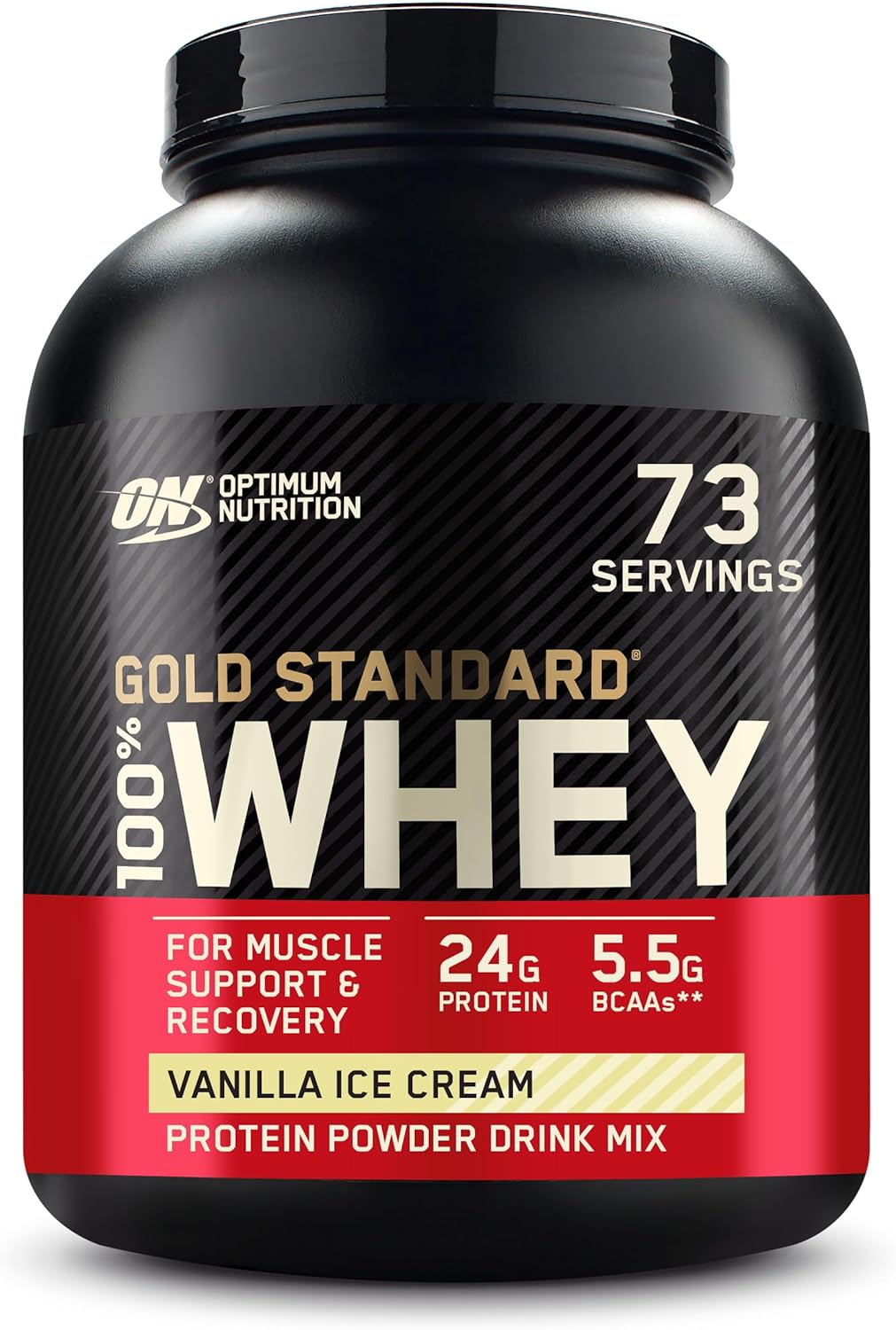
The formula is not the most innovative, and the ingredient list includes artificial sweeteners (sucralose and acesulfame potassium), which some people prefer to avoid. But in terms of taste, mixability, protein quality, and value, ON Gold Standard does nothing wrong. It is the Toyota Camry of protein powders — reliable, unexciting, and exactly what most people need.
Best Clean Label Whey: Transparent Labs 100% Grass-Fed Whey
If you care about ingredient transparency (hence the brand name), this is the pick. 28g of protein from 100% grass-fed whey isolate, no artificial sweeteners (sweetened with stevia and monk fruit), no artificial colors or flavors, and every batch is Informed Sport certified. The protein per serving is among the highest on this list.
The taste is good but not as sweet or indulgent as ON or Dymatize — the natural sweeteners give it a slightly different flavor profile that takes a few servings to adjust to if you are coming from sucralose-sweetened products. The price premium over ON Gold Standard (roughly $0.40 more per serving) is the cost of grass-fed sourcing and cleaner ingredients. Worth it if those factors matter to you.
Best Budget Whey: Myprotein Impact Whey Isolate
Myprotein runs frequent sales that bring the per-serving cost of their Impact Whey Isolate down to around $0.75 or less. At that price, it is among the cheapest per-gram protein options from a reputable brand. The protein content (21g per scoop) is lower than some competitors, but the low calorie count (90 per serving) makes it ideal for people on a cut. Informed Sport certified. The flavor range is enormous — over 40 options — though quality varies significantly by flavor. Salted Caramel and Natural Chocolate are consistently well-reviewed.
The downside: Myprotein's regular pricing is not exceptional. The value only clicks during their frequent promotional sales (Black Friday, seasonal events, etc.). Buy in bulk during sales and you get premium protein at budget prices.
Best Plant-Based Overall: Garden of Life Sport Organic Plant Protein
Garden of Life Sport delivers 30g of protein per serving from a blend of organic pea, sprouted navy bean, sprouted lentil, sprouted garbanzo bean, and cranberry seed protein. It is USDA Organic, Non-GMO Project Verified, NSF Certified for Sport, and Informed Choice certified. The multi-source blend provides a more complete amino acid profile than pea protein alone.
The taste is earthy — there is no getting around the fact that plant protein blends taste like plants. The Chocolate flavor is the most palatable, especially when blended with a banana and almond milk rather than just water. Texture is slightly gritty compared to whey, which is true of all plant-based options. At $1.80 per serving, it is on the expensive side, but the certifications and ingredient quality justify the premium for people who want the best vegan option available.
Best Tasting Plant-Based: KOS Organic Plant Protein
KOS has done the best job of any plant protein brand at making their product taste good without compromising on ingredients. The Chocolate Peanut Butter flavor is genuinely enjoyable — something I could not say about most plant proteins I have tried. The blend includes pea, flax, quinoa, pumpkin seed, and chia seed protein, providing 20g per serving. It includes digestive enzymes, which help with the bloating that some people experience with pea protein.
The protein per serving is lower than Garden of Life Sport (20g vs 30g), and it does not carry NSF for Sport certification, which matters for competitive athletes. For everyday use by people who want a plant protein that actually tastes good in a shaker with water, KOS is the best option I have found.
Nutrition Comparison: Per Serving Breakdown
| Product | Protein | Calories | Fat | Carbs | Sugar | Sodium |
|---|---|---|---|---|---|---|
| ON Gold Standard | 24g | 120 | 1.5g | 4g | 2g | 130mg |
| Transparent Labs Whey | 28g | 120 | 0.5g | 1g | 0g | 115mg |
| Myprotein Impact Isolate | 21g | 90 | 0.2g | 0.6g | 0.6g | 50mg |
| Dymatize ISO100 | 25g | 110 | 0.5g | 1g | 0g | 160mg |
| Garden of Life Sport | 30g | 160 | 2g | 7g | 0g | 290mg |
| KOS Organic | 20g | 170 | 5g | 10g | 5g | 340mg |
| Orgain Organic | 21g | 150 | 4g | 15g | 0g | 290mg |
| Naked Whey | 25g | 120 | 2g | 3g | 2g | 45mg |
How Much Protein Do You Actually Need?
The often-cited "1 gram per pound of body weight" rule is a simplification, but it is in the right ballpark for people who exercise regularly. Research consistently supports 0.7 to 1.0 grams of protein per pound of body weight (1.6 to 2.2 g/kg) for maximizing muscle protein synthesis in resistance-trained individuals. A 170-pound person should aim for 120 to 170 grams of protein daily.
You do not need to get all of that from supplements. Whole food sources (chicken, fish, eggs, Greek yogurt, legumes) should form the foundation. Protein powder fills the gap between what you eat and what you need — typically 1 to 2 scoops per day. If you consistently hit your protein target through food alone, you do not need protein powder at all. It is a convenience product, not a requirement.
- 130 lb person: 91 - 130g protein/day
- 150 lb person: 105 - 150g protein/day
- 170 lb person: 119 - 170g protein/day
- 200 lb person: 140 - 200g protein/day
- Sedentary adults (general health): 0.36g per pound (RDA minimum)
- Older adults (50+): Higher intake (1.0-1.2g/kg) may help preserve muscle mass
How to Use Protein Powder Effectively
Timing matters less than total daily intake. The "anabolic window" — the idea that you must consume protein within 30 minutes of training — has been largely debunked by research. What matters is consuming adequate protein distributed across your meals throughout the day. That said, having a protein shake within a few hours of training is practical and convenient.
For mixing: whey isolate mixes cleanly with water in a shaker cup. Concentrates and plant proteins often benefit from a blender. Adding a frozen banana, ice, and milk (dairy or plant) turns any protein powder into a significantly better-tasting smoothie and adds extra nutrients. If you use protein powder in oatmeal or baking, choose an unflavored or mild-flavored option — heavily sweetened chocolate protein in pancakes does not always turn out as well as you would hope.
Heavy Metal Concerns in Protein Powders
A 2018 Clean Label Project study found detectable levels of lead, cadmium, arsenic, and BPA in many protein powders, with plant-based options showing higher levels on average than whey. This is because plants absorb heavy metals from soil more readily than animal sources. The levels were generally within regulatory limits but raised concerns about long-term daily consumption.
To minimize exposure: choose products with third-party testing specifically for heavy metals (Labdoor and Clean Label Project both test for this), rotate between brands rather than using the same one indefinitely, and prioritize whey isolate if heavy metals are a primary concern — the additional processing steps remove more contaminants.
Frequently Asked Questions
Is whey protein bad for your kidneys?
In healthy individuals, no. Multiple studies have found no adverse effect of high-protein diets (up to 2.2g/kg body weight) on kidney function in people without pre-existing kidney disease. If you have existing kidney disease or impaired renal function, consult your doctor before increasing protein intake significantly.
Does plant protein build muscle as effectively as whey?
When total daily protein intake is equalized, plant protein supports similar muscle growth to whey over time. A 2021 study in Sports Medicine found no significant difference in lean mass gains between whey and pea protein groups training for 8 weeks at equivalent protein intakes. The key is hitting your total daily target. You may need slightly more plant protein per serving to match whey's leucine content.
Why does protein powder cause bloating?
Common causes: lactose in whey concentrate (switch to isolate), FODMAPs in pea protein (some people are sensitive), artificial sweeteners (especially sugar alcohols), or simply consuming too much protein too fast. Try a different protein source, reduce serving size, or look for products with added digestive enzymes.
Is grass-fed whey actually better?
Grass-fed whey has a slightly different fatty acid profile (more omega-3s and CLA) compared to conventional whey, but the protein quality — amino acid content and digestibility — is essentially identical. The grass-fed label matters more for ethical and environmental reasons than for measurable nutritional superiority. If the price difference is small, choose grass-fed. If it doubles the cost, the nutritional benefit does not justify it.
Can I use protein powder as a meal replacement?
A scoop of protein powder is not a meal. It provides protein and little else — minimal fat, fiber, vitamins, or minerals. If you need a quick meal replacement, blend protein powder with fruits, nut butter, oats, and greens to create a nutritionally complete shake. Dedicated meal replacement products (Huel, Soylent) are designed for this purpose and include a broader nutrient profile.
How long does an opened tub of protein powder last?
Most protein powders remain effective for 6 to 12 months after opening when stored in a cool, dry place with the lid sealed. Whey isolate lasts longer than concentrate due to lower fat and moisture content. Signs of degradation: clumping, off smell, change in taste, or visible discoloration. Do not store protein powder in humid environments like a bathroom.
As an Amazon Associate, I earn from qualifying purchases. This comes at no additional cost to you.


댓글
댓글 쓰기